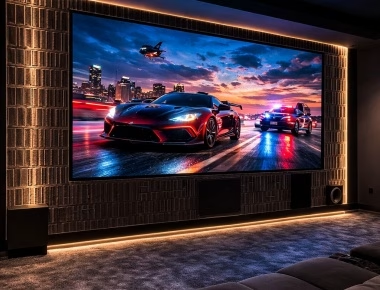
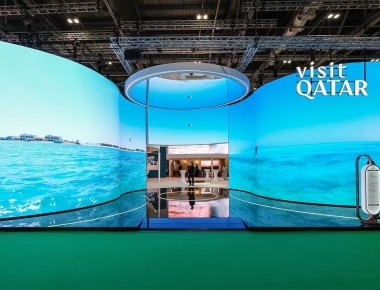
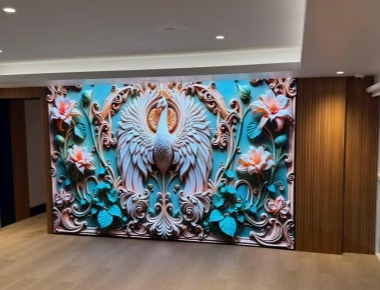
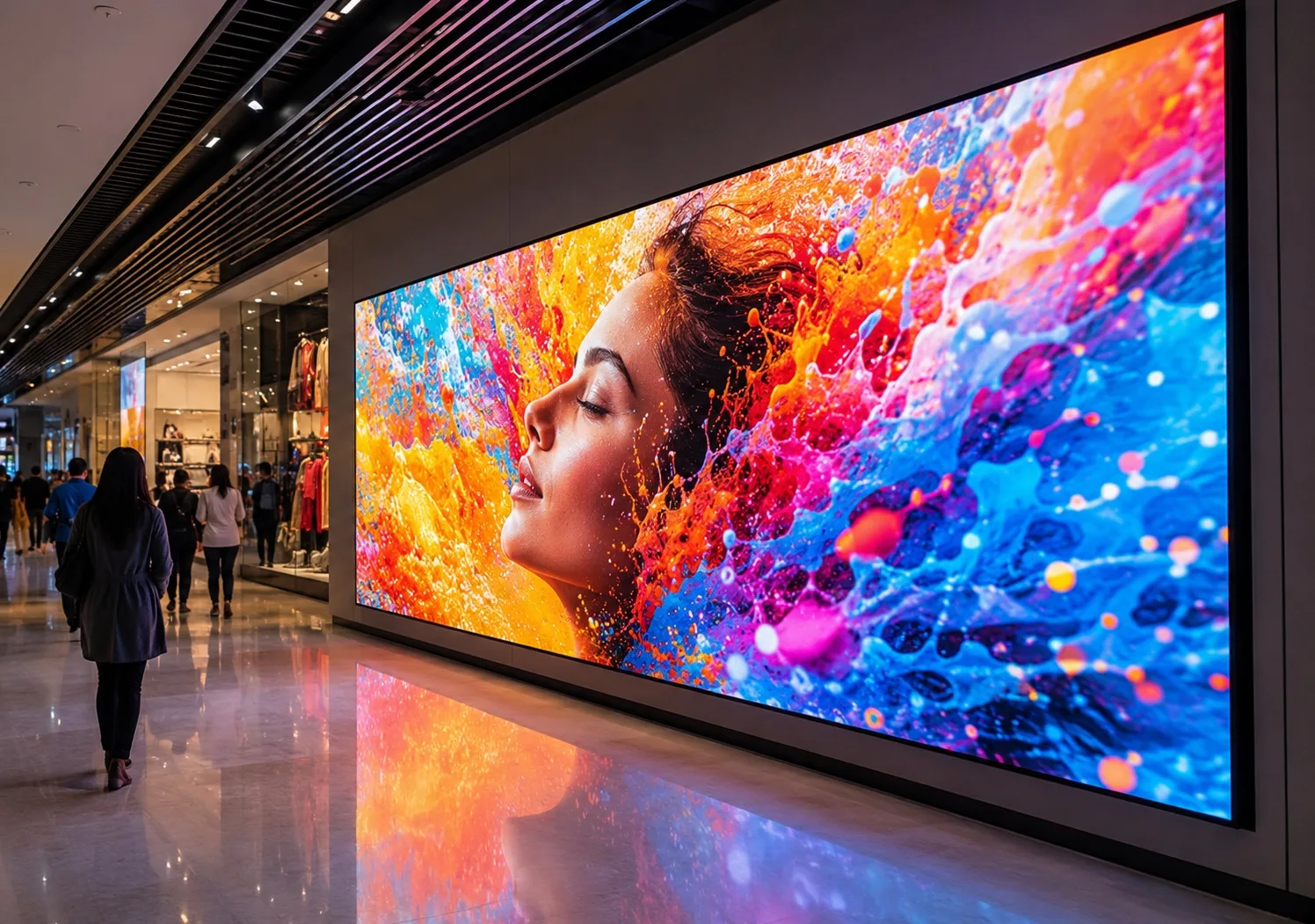
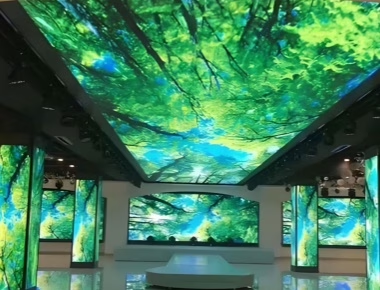
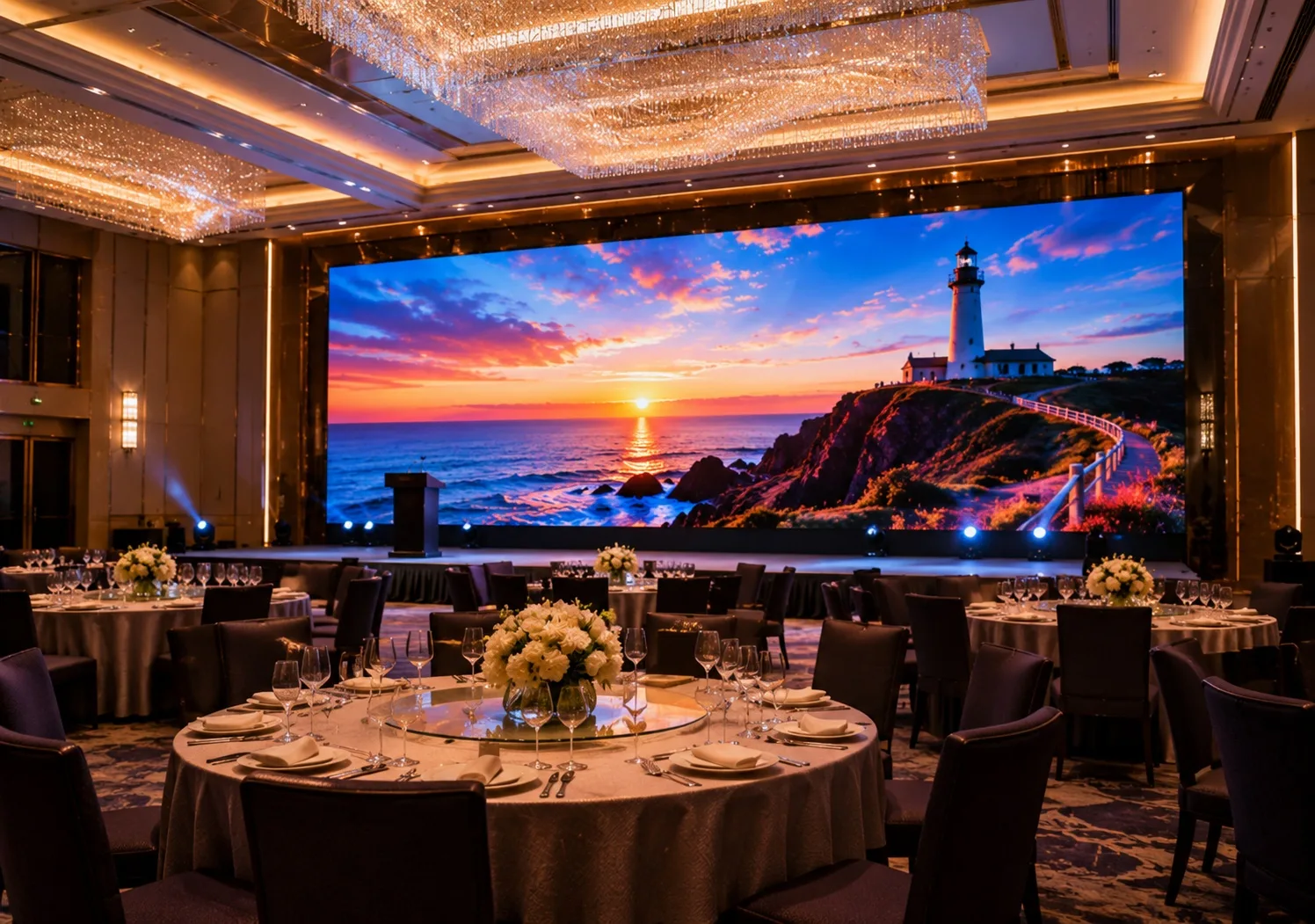
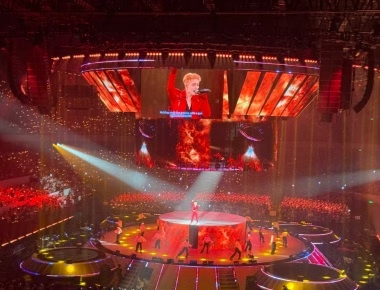
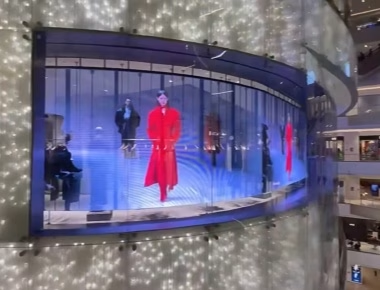
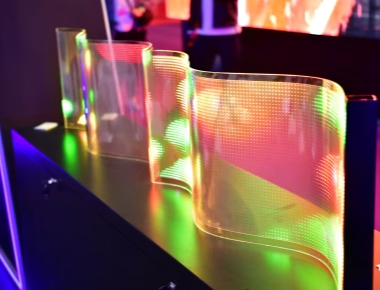
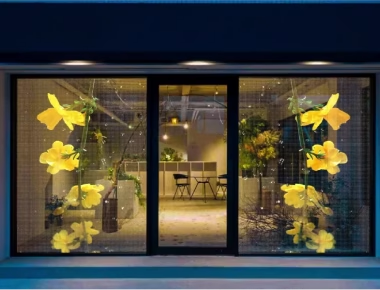
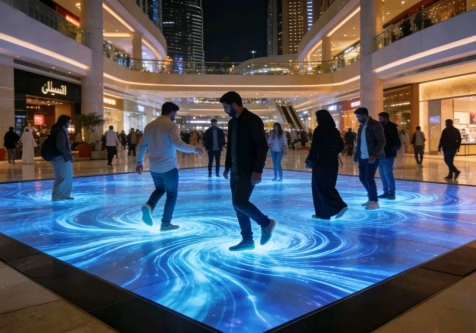
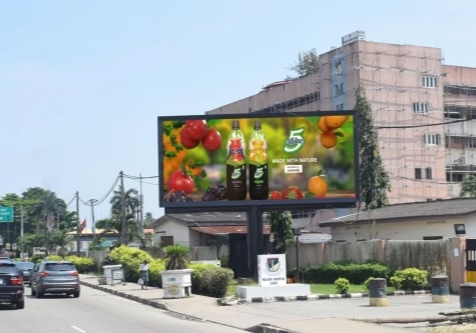
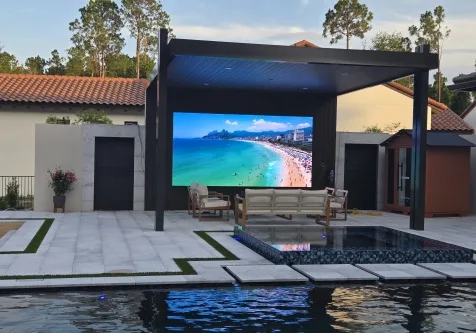
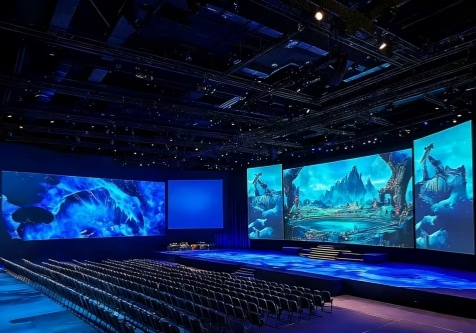
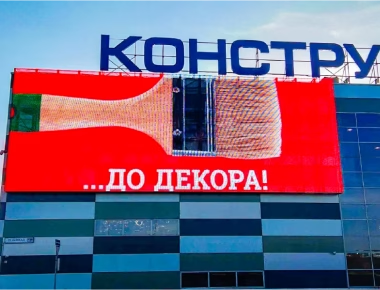
A transparent LED display should be chosen around the glass, viewing conditions, content, structure, and service plan. Products marketed as transparent LED film, transparent cabinets, holographic screens, mesh, or LED glass can use very different physical architectures. Their published transparency and brightness numbers are not interchangeable unless the test method and installed configuration are also comparable.
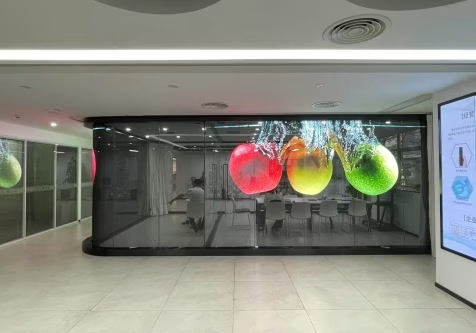
Begin with the site survey and visual goal, then use LEDU’s transparent LED display solutions to explore relevant architectures. The final decision should be made from model-specific drawings, samples, test conditions, and installation responsibilities.
Quick answer: Use a framed transparent cabinet when modularity, alignment, and service access are priorities; consider adhesive film when low visual weight and close glass mounting are central; evaluate holographic-style open structures for a very open visual effect; use mesh or grid systems for large facades; and coordinate integrated LED glass early as a building element. Never choose by a transparency percentage alone. Test the exact sample on or against representative glass in project lighting.
First, Identify What the Supplier Is Actually Selling
Transparent LED terminology is not fully standardized. Two suppliers may use the same name for different constructions, or different names for similar products. Ask for a physical section drawing, module and support dimensions, front/rear photographs, and a real sample before comparing specifications.
| Architecture |
Physical idea |
Typical reasons to consider it |
Questions to resolve |
| Framed transparent cabinet or strip |
LED strips or modules held in a repeatable cabinet/frame |
Modular installation, alignment, defined service units, shop windows, atriums, and indoor stages |
Frame visibility, depth, seams, hanging/standing structure, power/data path, rear view, service direction, and weight |
| Adhesive LED film or crystal-film style |
Thin flexible or semi-flexible circuit applied close to glass |
Low visual weight, limited mounting depth, retrofit shop windows, and curved or custom glass where approved |
Glass compatibility, adhesive aging, removal, heat, cable termination, module replacement, curvature, and facade warranty |
| Holographic-style transparent LED |
Highly open circuit or board structure designed to create a floating-image effect |
Attention-grabbing retail and exhibition content with a visually open background |
Actual pixel layout, viewing distance, content resolution, fragility, support method, service, and whether the name describes only a visual effect |
| Mesh or grid facade |
Larger open grid with long viewing distance and significant structural spacing |
Large architecture, media facades, and projects where openness and wind passage matter |
Wind and structural engineering, outdoor rating, corrosion, cable runs, access, facade loads, and local approvals |
| Integrated LED or photoelectric glass |
Lighting/display elements incorporated into a glass assembly |
New-build architecture and projects that want the display integrated with the facade material |
Glass make-up, certification, structural role, lead time, replacement strategy, wiring, fire/building requirements, and responsible facade contractor |
The term holographic-style in this guide describes a market visual effect created by a highly open transparent LED structure. It does not mean projection holography or prove that the image is a three-dimensional hologram.
Transparency Is a Trade-Off, Not a Stand-Alone Score
A transparency or openness figure can be useful only when the buyer knows what was measured. Ask whether the calculation includes the active LED area, support bars, cabinet frame, power supplies, cables, control boxes, protective layers, and inactive borders. Also ask from which direction it was measured. The apparent openness from the front may differ from the rear or from an oblique angle.
Higher open area can reduce the amount of circuitry that blocks the view, but it may also reduce pixel density, image fill, mechanical protection, or the space available for power and data. A denser image can improve text and close-view detail while making the display more visible when it is off. The correct balance depends on the content and the reason the glass must remain transparent.
Buying rule: Compare the exact installed configuration, not an isolated module. Request an off-state photograph, a front/rear/side video, and the supplier’s calculation method. Treat the published percentage as a model-specific claim to verify, not a category guarantee.
Brightness Does Not Guarantee Daylight Readability
A high luminance specification can still produce a weak window image if the glass reflects the sky, the viewer looks toward a bright exterior, sunlight falls directly on the display, the content uses thin lines or large transparent areas, or the product cannot sustain the advertised output in the installed thermal condition. At night, the same setting may be unnecessarily bright.
Survey the window orientation, direct-sun periods, exterior and interior backgrounds, glass tint or coating, reflection, viewing side, expected viewing distance, and operating hours. Then test representative content at midday, evening, and night. Evaluate both readability and the off-state appearance of the shop or building behind the display.
Match Pixel Pitch and Content to the Viewing Job
Transparent displays often trade image density for openness. Start with the closest important viewer and the smallest required content, then calculate the active pixel canvas from the proposed dimensions and pitch. A large facade intended for distant motion graphics has different needs from a shop window that must show product names, prices, or faces at short range.
Design content for the medium. Large high-contrast subjects, deliberate negative space, slower movement, and limited fine text generally preserve the floating, open-glass effect. Full-screen bright blocks can make the hardware and structure more visible, reduce the perceived transparency, and increase power and thermal demand. Test the real playlist rather than a supplier demo alone.
Select the Product Family After the Site Survey
Use the transparent LED display range as a shortlist, not as a substitute for the site data. The following paths help organize the comparison:
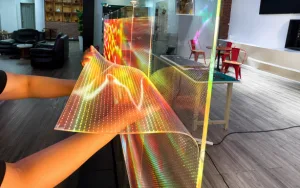
For a shallow glass retrofit, review a film transparent LED display and verify the permitted glass, adhesive system, power/data terminations, bend limits, replacement method, and warranty impact.
Where repeatable framed modules and defined service units are more important, compare an indoor transparent LED display with the available support depth, sightlines, and rear appearance.

For a very open visual effect, inspect a real holographic-style transparent LED screen from every important angle and test the required text, video, handling, and service process. The marketing name alone does not define the architecture.
Nine Site Questions That Change the Recommendation
1. What glass is already installed?
Record glass composition, thickness, coating or tint, lamination, curvature, mullions, permitted attachment, cleaning rules, thermal limits, and the facade or glazing warranty. Obtain written approval from the responsible designer or contractor where required.
2. Which side must remain transparent?
Define whether people look from outside to inside, inside to outside, or both. Include rear appearance, cable visibility, frame visibility, reflections, and oblique views.
3. What are the light conditions?
Map window orientation, direct sun, interior lighting, exterior background, reflections, seasonal changes, operating hours, and automatic or scheduled dimming needs.
4. Is the display indoor, semi-exposed, or outdoor?
Describe rain paths, condensation, humidity, dust, cleaning, temperature, UV, wind, salt or pollution, and any sheltered-zone assumptions. Require a model-specific environmental rating for the complete assembly.
5. How will it be supported?
Confirm hanging, standing, frame, adhesive, integrated-glass, or facade support; loads; tolerances; movement; vibration; access equipment; and engineering responsibility.
6. Where do power and data go?
Show every cable, control box, power supply, entry point, slack loop, and isolation point. A transparent installation can fail visually even when the active screen looks open.
7. How will it be serviced?
Define service units, access side, replacement steps, work-at-height needs, spare parts, calibration, module matching, cleaning method, and how the glass remains usable during repair.
8. What must the content communicate?
Provide pixel-canvas targets, text size, playlist, brand colors, motion style, day/night versions, and any interaction or sensor integration.
9. Which approvals apply?
Identify building, facade, fire, electrical, structural, advertising, heritage, landlord, and public-safety requirements in the destination. Product marketing is not approval documentation.
How to Compare Samples and Quotations
Ask each supplier to identify the exact model and configuration, then compare like with like. A useful submission should include:
- Physical architecture, pixel pitch, active dimensions, total pixel resolution, module and frame dimensions, weight, thickness, and front/rear appearance.
- Transparency or open-area figure with the calculation method and a clear statement of what structure, electronics, and borders are included.
- Model-specific luminance, adjustment method, typical operating point, power and thermal information, and any derating conditions.
- Approved environmental rating, operating limits, glass compatibility, structural concept, cable/power layout, and required local approvals.
- Control system, input format, content canvas, brightness scheduling, monitoring, configuration-file ownership, and integration responsibilities.
- Service method, spare units and electronics, repair capability, calibration/matching process, warranty scope, and replacement availability.
- A real sample test or mock-up using the project’s glass/background, viewing positions, daylight periods, content, and camera exposure.
Freeze the accepted sample conditions, drawings, specification, media evidence, and installation responsibilities in the purchase documentation. If the delivered system changes, repeat the affected review instead of assuming the earlier result still applies.
Common Transparent LED Display Buying Mistakes
- Selecting the highest transparency percentage. The number may exclude frames and cabling or use a different calculation method, while the image may lack the required density.
- Comparing brightness without the window. Daylight, reflection, tint, content fill, viewing side, and thermal limits can matter as much as the published value.
- Assuming film means simple installation. Glass approval, surface preparation, alignment, cable termination, heat, removal, and module replacement still require a defined method.
- Using holographic as a technical specification. Ask what the product is physically, how it is supported, what resolution it creates, and how it is repaired.
- Ignoring the rear and side views. Frames, power boxes, cables, seams, reflections, and support members may dominate the appearance from inside the building.
- Leaving content until the end. Transparent displays need a content system designed for openness, contrast, readable scale, and day/night conditions.
Frequently Asked Questions
What is the best type of transparent LED display?
There is no universal best type. A framed cabinet may favor modular service; adhesive film may favor shallow installation; holographic-style products may favor a very open effect; mesh may fit large facades; integrated LED glass may fit early-stage architecture. The site and content decide.
What transparency percentage should I choose?
Do not select from a percentage alone. Ask how it was calculated and whether frames, power, data, supports, and inactive borders are included. Compare the exact installed configuration and inspect it from important viewing angles.
Is a transparent LED screen visible in direct sunlight?
It depends on the exact model, operating luminance, glass and reflections, viewing direction, content, background, thermal condition, and sun path. A site-like sample test is more reliable than a category claim.
Is transparent LED film easy to remove or replace?
That depends on the film architecture, adhesive, glass surface, installation age, cable terminations, and replacement unit. Request the approved removal and repair procedure and confirm any effect on the glazing warranty.
Is a holographic transparent LED screen a real hologram?
Usually the term describes a transparent LED structure and a floating-image visual effect. It is not the same as projection holography. Ask the supplier to describe the physical construction and sample result.
Can transparent LED displays be installed outdoors?
Only a model and complete installation designed for the exposure should be used. Verify ingress protection, temperature, UV, corrosion, wind/structure, connectors, drainage, service access, electrical compliance, and local approvals.
What content works best on a transparent LED display?
Large, high-contrast subjects, intentional dark or empty areas, restrained fine text, and day/night versions usually preserve the open visual effect. Test the real playlist on the exact pixel canvas.
Prepare a Transparent Display Site Brief
Send LEDU the glass dimensions and composition, photos from both sides, window orientation, direct-sun periods, required viewing positions, content examples, indoor/outdoor conditions, attachment limits, cable and power routes, service access, destination, schedule, and budget range. Include facade or shop drawings when available.
LEDU Display can use those inputs to compare transparent cabinet, film, holographic-style, mesh, or integrated-glass approaches and identify the model-specific evidence required. A useful proposal should include the physical architecture, active canvas, mounting and cable concept, service method, relevant specification, real sample evidence, and acceptance plan.
Project inquiry: [email protected] | contact LEDU Display
LEDU Display – From Light to Delight.