IP65 is an ingress-protection code for an enclosure. For an outdoor LED screen, the first digit 6 indicates dust-tight protection, and the second digit 5 indicates protection against water jets under the defined test conditions. It does not mean that every part of the project is waterproof or suitable for every outdoor environment.
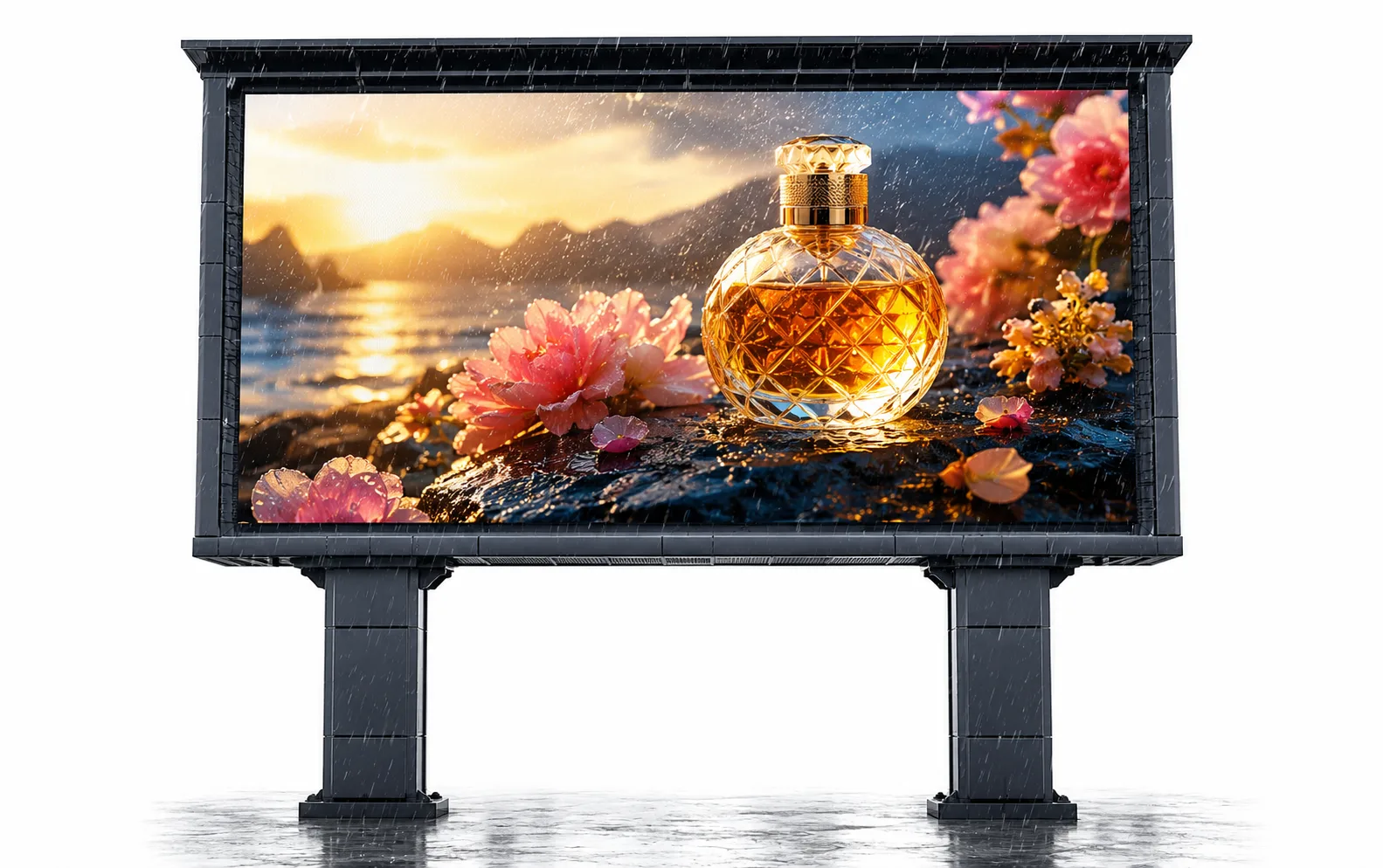
The rating must be attached to the exact product, enclosure face, sample configuration, and evidence. A cabinet may have different front and rear ratings, and installation details such as joints, service doors, cable entries, gaskets, drainage, or field modifications can affect the protection of the finished display.
Quick answer: IP65 is strong protection against dust ingress and water jets for the enclosure covered by the test. Before ordering, confirm the exact model and rated faces, obtain applicable evidence, and separately evaluate sun, brightness, heat, UV, corrosion, wind, condensation, structure, electrical safety, lightning/grounding, service access, and local approvals.
How to Read IP65
IP means ingress protection. Under IEC 60529, the two characteristic digits describe protection provided by an enclosure against access to hazardous parts and ingress of solid foreign objects, followed by protection against water. For an LED buyer, the simplified reading is:
| Code |
First digit: solids |
Second digit: water |
Buyer interpretation |
| IP54 |
5: dust-protected |
4: splashing water |
May fit some protected equipment or locations only when the complete model and exposure justify it |
| IP65 |
6: dust-tight |
5: water jets |
Commonly considered for exposed outdoor enclosures, subject to the exact rated face and project conditions |
| IP66 |
6: dust-tight |
6: powerful water jets |
A different and more severe water-jet test; select when the documented exposure and design require it |
| IP67 |
6: dust-tight |
7: temporary immersion under specified conditions |
Addresses temporary immersion; it is not automatically the right or necessary code for every outdoor display |
Simplified buyer guide. Use the applicable standard and model-specific test documentation for contractual interpretation.
The two digits address different hazards. Do not treat the complete code as a marketing score or choose the largest number without understanding the exposure. For example, an immersion test and a water-jet test represent different conditions, while wind-driven rain, water pooling, condensation, salt, heat, and installation workmanship require additional design review.
What IP65 Does Not Prove
An IP65 marking can be an important part of an outdoor LED specification, but it does not establish the following by itself:
- Daylight image performance. The code says nothing about luminance, contrast, reflection, viewing angle, color, or automatic brightness control.
- Wind and structural safety. Cabinet loads, support steel, foundations, fasteners, fatigue, movement, seismic conditions, and local engineering remain separate.
- UV, corrosion, and salt resistance. Materials, coatings, fasteners, connectors, plastics, masks, and finishes need environment-specific evidence and maintenance.
- Temperature and condensation control. Thermal design, ventilation, heaters or air conditioning where used, drainage, dew point, and operating limits are separate.
- Electrical compliance and lightning protection. Product listing, wiring, disconnects, overcurrent protection, grounding/bonding, surge protection, lightning design, and local inspection are not conveyed by IP65.
- Impact or vandal resistance. A water/dust enclosure rating does not establish mechanical-impact performance or front-face damage resistance.
- Quality after installation and aging. Damage, open doors, missing screws, compressed or dirty gaskets, drilled holes, poor cable glands, and later repairs can change the protection.
Front IP65 and Rear IP54 Are Not the Same as All-Sides IP65
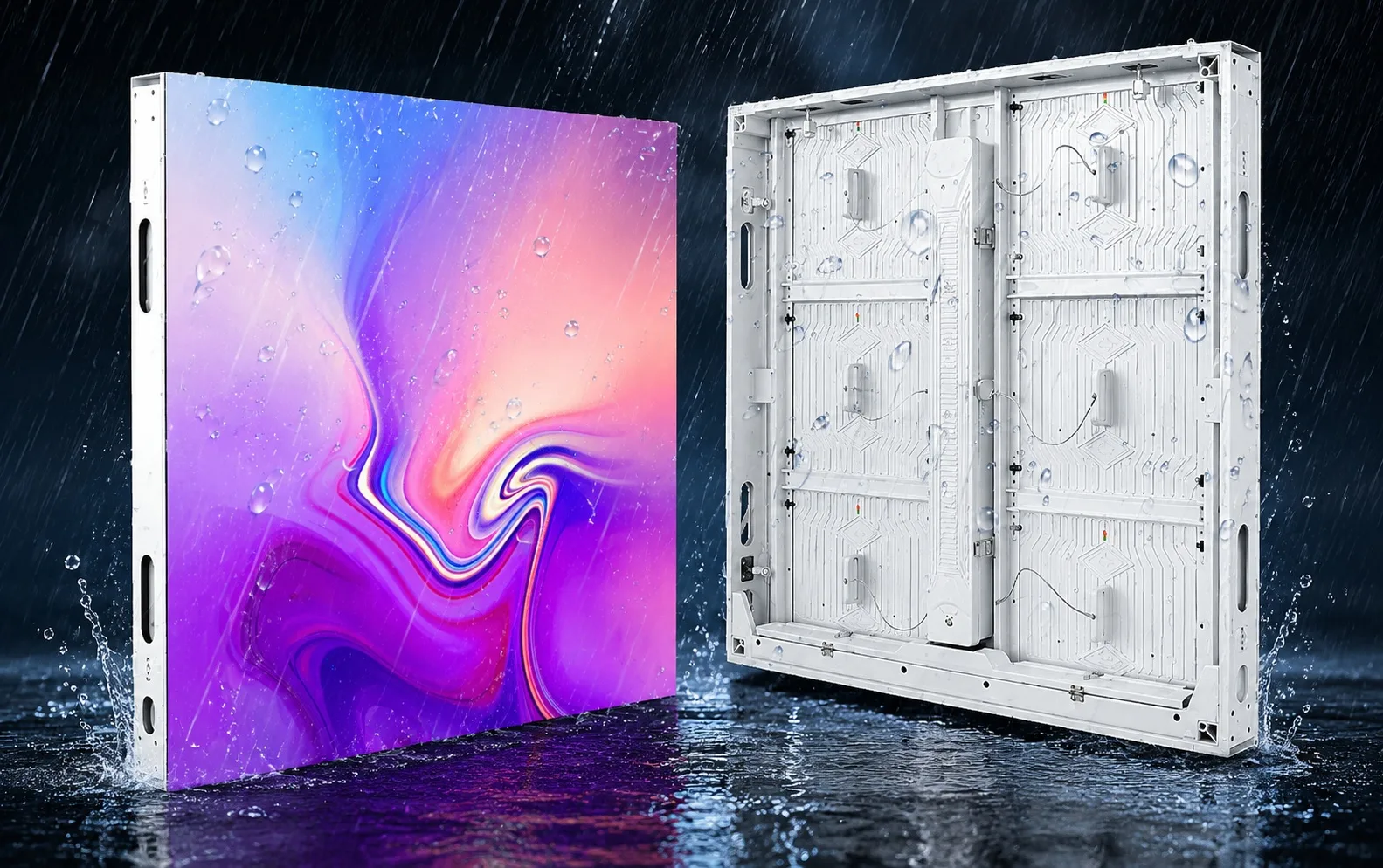
Some outdoor LED products publish separate ratings for the front and rear. This can be legitimate when the front is directly exposed and the rear is installed inside a protected structure or weather enclosure. It is not automatically acceptable for a freestanding, rooftop, double-sided, open-back, coastal, or wind-driven-rain installation.
The quotation and drawing should state the rating of each relevant face and enclosure: module front, cabinet front, cabinet rear, service door, power/control box, and connector system where applicable. It should also show which parts are exposed after installation. If a label says only IP65, ask the supplier to define the boundary instead of assuming all directions are covered.
Procurement rule: Write front and rear ratings explicitly in the approved specification and order. A brochure-level family statement should not be copied into a contract unless it matches the exact model, size, configuration, and evidence supplied.
What Evidence Should a Buyer Request?
A credible IP claim should be traceable. Depending on the project and destination, request:
1. Exact product identification
Model/series, cabinet version, active size, module, service-door arrangement, connectors, power/control enclosure, and any options that affect sealing.
2. Applicable report or certificate
Issuing laboratory or body, report number, standard and edition, test date, tested sample, tested faces, configuration, result, limitations, and permission to verify the document.
3. Construction evidence
Cabinet and section drawings, gasket and seal details, cable-entry method, fasteners, vents, drains, pressure equalization where used, and approved field penetrations.
4. Installation instructions
Jointing sequence, torque or closure requirements, cable glands, drip loops, door checks, drainage, ventilation, handling, damage inspection, and prohibited modifications.
5. Quality and acceptance records
Incoming and production checks, enclosure inspection, test sampling plan where applicable, pre-shipment inspection, serial/batch identification, installation inspection, and sign-off criteria.
A report for one cabinet does not automatically cover a different enclosure, door, connector, module, dimension, vent, or factory change. Ask the supplier to explain the product-family relationship and document approved variants.
Installation Details That Commonly Break Ingress Protection
The enclosure can pass a laboratory test and still fail on site if the installed configuration is different. Review these interfaces before construction:
- Cabinet joints and alignment. Distortion or uneven compression can prevent seals from working as intended.
- Service doors and module seating. Gaskets must be clean, undamaged, correctly positioned, and closed using the approved hardware and sequence.
- Cable entries and connectors. Use the specified connector, gland, cap, orientation, bend radius, and strain relief; protect unused ports.
- Field drilling and fasteners. Unapproved holes, missing seals, wrong fasteners, or later signage attachments can create direct water paths.
- Drainage, drip loops, and water paths. Prevent water from being directed toward entries or trapped behind the screen; keep approved drains clear.
- Ventilation and thermal modifications. Fans, vents, filters, louvers, HVAC ducts, and pressure equalization must be part of the approved enclosure design.
- Structure movement. Wind, settlement, thermal expansion, and frame tolerances can stress cabinets, seams, cables, and doors.
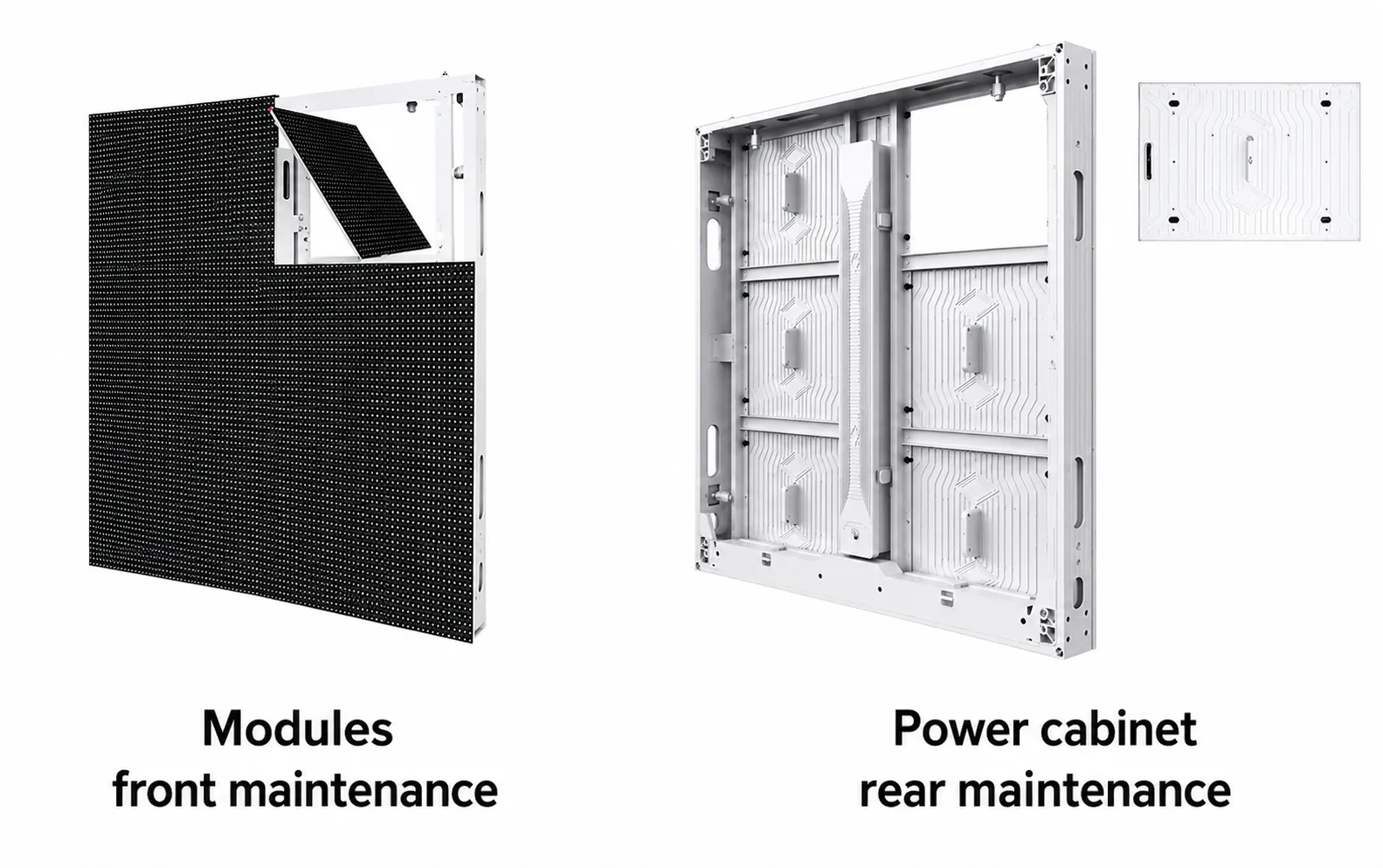
Do not improvise a hose test on an energized or installed display. Any water test should use an agreed method, safety plan, responsibility, and acceptance criteria consistent with the manufacturer and project documentation.
Outdoor Conditions to Specify Beyond IP65
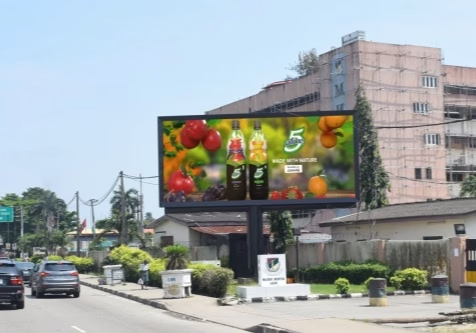
When planning outdoor LED billboard solutions, provide the environmental and operational data that the IP code does not contain:
For model-level product references, compare the advertising LED display and commercial LED display pages, then verify the exact quoted cabinet and applicable ingress-protection evidence.
- Screen dimensions, height, orientation, single- or double-sided exposure, structure, rear enclosure, and maintenance access.
- Rain direction, washdown or cleaning, flood or pooling risk, humidity, condensation, dust, pollution, salt, chemicals, snow or ice where relevant.
- Minimum and maximum ambient temperature, solar load, daily operating hours, ventilation or cooling, and thermal shutdown/monitoring strategy.
- Required daytime and nighttime brightness, viewing distance, content, dimming, light-spill restrictions, and local advertising rules.
- Wind and structural design criteria, foundations or attachment, movement, corrosion system, fasteners, engineering responsibility, and inspection.
- Power system, distribution, disconnects, grounding/bonding, surge and lightning strategy, communication path, redundancy, remote monitoring, and destination compliance.
- Service route, safe work access, spare modules/electronics, seal and gasket maintenance, cleaning, inspection intervals, and post-storm checks.
A Practical IP65 Buying Checklist
- Identify the exposure. Mark rain, jets or cleaning, dust, wind direction, rear exposure, pooling, condensation, salt, temperature, UV, and maintenance conditions.
- Define the rated boundary. Write the exact model and front, rear, side, door, power/control, and connector protection that the project requires.
- Review the evidence. Match the report or certificate to the ordered configuration, standard/edition, tested sample, faces, limitations, and supplier documentation.
- Coordinate the installation. Approve joints, gaskets, doors, cable entries, structure, drainage, ventilation, field penetrations, and inspection responsibilities.
- Specify non-IP performance. Add brightness, thermal, UV, corrosion, wind, electrical, safety, camera, control, service, and local approval requirements.
- Create acceptance and maintenance plans. Record visual/enclosure inspection, documentation, configuration, safe testing where agreed, spares, periodic seal checks, cleaning, and post-event inspection.
Frequently Asked Questions
Is an IP65 LED screen waterproof?
IP65 means the tested enclosure is dust-tight and protected against water jets under defined conditions. Waterproof is too broad: IP65 does not indicate immersion protection or guarantee suitability for every rain, flood, cleaning, installation, or aging condition.
Is IP65 enough for every outdoor LED display?
No. The required enclosure protection depends on exposure, and the project also needs brightness, thermal, UV, corrosion, wind, electrical, structure, service, and local-compliance review. Verify the exact model and installed condition.
What is the difference between IP54 and IP65?
IP54 uses first digit 5, meaning dust-protected, and second digit 4, addressing splashing water. IP65 uses first digit 6, meaning dust-tight, and second digit 5, addressing water jets. Confirm the precise scope from the applicable documentation.
Is IP66 better than IP65 for an outdoor screen?
IP66 addresses a more severe water-jet test than IP65, but the correct selection depends on actual exposure and the complete design. A larger code does not replace thermal, corrosion, structural, electrical, or installation review.
Does IP67 include all outdoor risks?
No. IP67 addresses dust-tight protection and temporary immersion under specified conditions. It does not establish daylight image performance, UV, corrosion, wind, impact, temperature, electrical approval, or installation quality.
Can the front and rear of an LED cabinet have different IP ratings?
Yes, if the product is designed, tested, and documented that way. The project must confirm which faces are exposed and whether the rear environment genuinely provides the assumed protection.
Does IP65 satisfy North American or other local approvals?
Not by itself. An IEC IP code describes enclosure ingress protection. Product listing, electrical, structural, fire, building, advertising, and other approvals depend on the destination and project.
How can I verify an IP65 claim before ordering?
Request exact model identification, applicable report or certificate, standard/edition, tested sample and faces, limitations, construction drawings, installation instructions, and confirmation that the ordered configuration matches the evidence.
Send the Outdoor Exposure, Not Only the Screen Size
Send LEDU the screen dimensions and orientation, front and rear exposure, structure concept, rain and cleaning conditions, dust, temperature, humidity, salt or pollution, wind criteria, daylight requirement, power, service access, destination standards, schedule, and any enclosure rating required by the consultant. Include site photos and drawings.
LEDU Display can use those inputs to identify a suitable outdoor cabinet approach and the evidence that must be checked for the exact model. The proposal should state rated boundaries, project assumptions, installation interfaces, non-IP environmental requirements, compliance responsibilities, and acceptance criteria instead of relying on a single IP65 label.
Project inquiry: [email protected] | contact LEDU Display
LEDU Display – From Light to Delight.